
Often technologies designed to prevent identification are obtrusive that actively draw attention. Near infrared lights, weird patterns to interfere with neural networks, or simple masks and hats all stand out. Instead, we can look at perception to inform how to look different without looking weird. The black & blue / white & gold dress example from 2015 is a great example of how colours look confusing under different lighting.
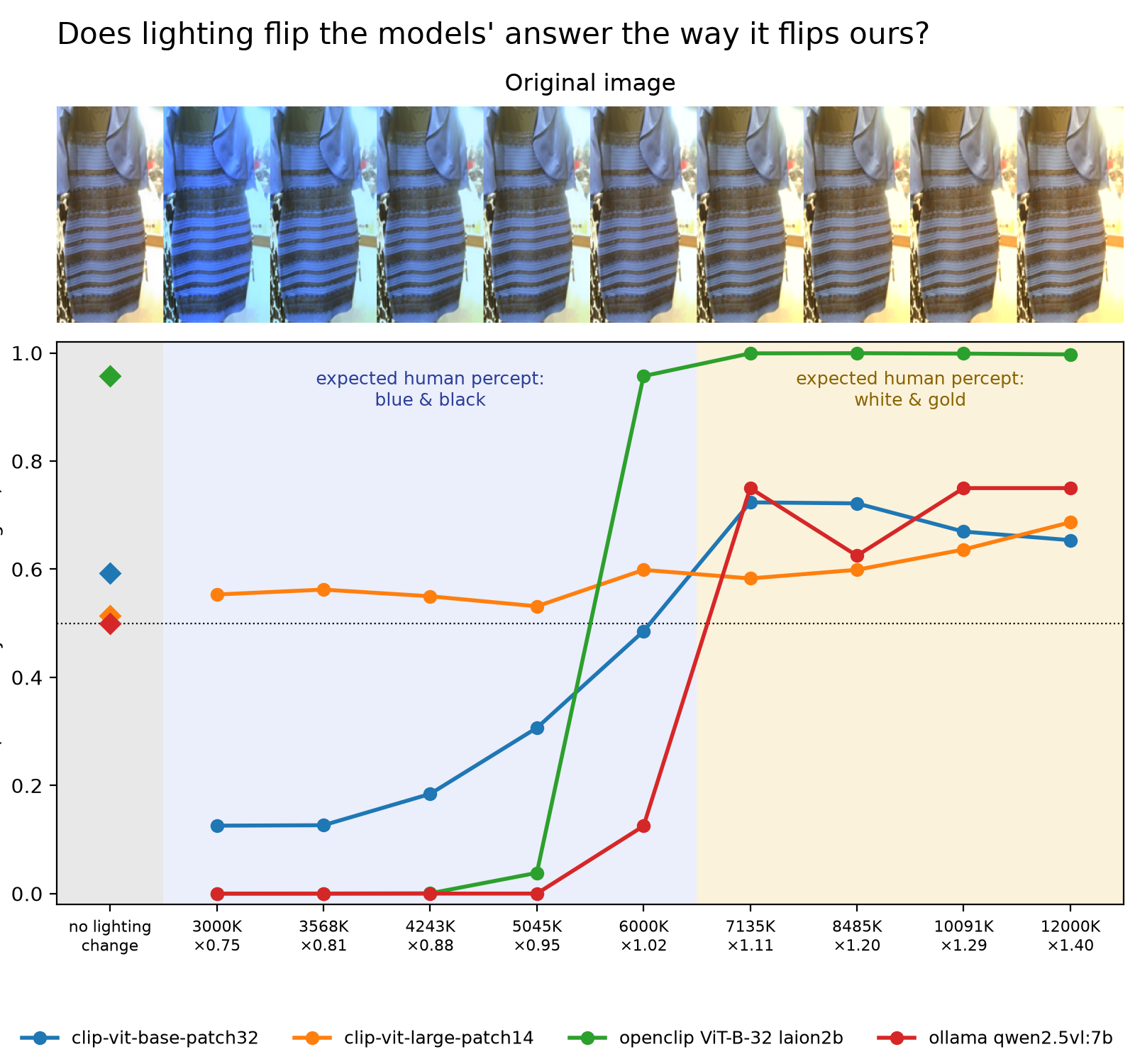
It turns out that computer vision models are susceptible to this confusion too; the graph below shows various models prediction that the dress is “white and gold”. We can see that three models totally change their decision of the dress colour as the lighting changes. As modern computer vision systems often use natural language to assist in tracking, we can see how this could fail easily. Interestingly, one model (orange) can’t decide what colour the dress is at all.
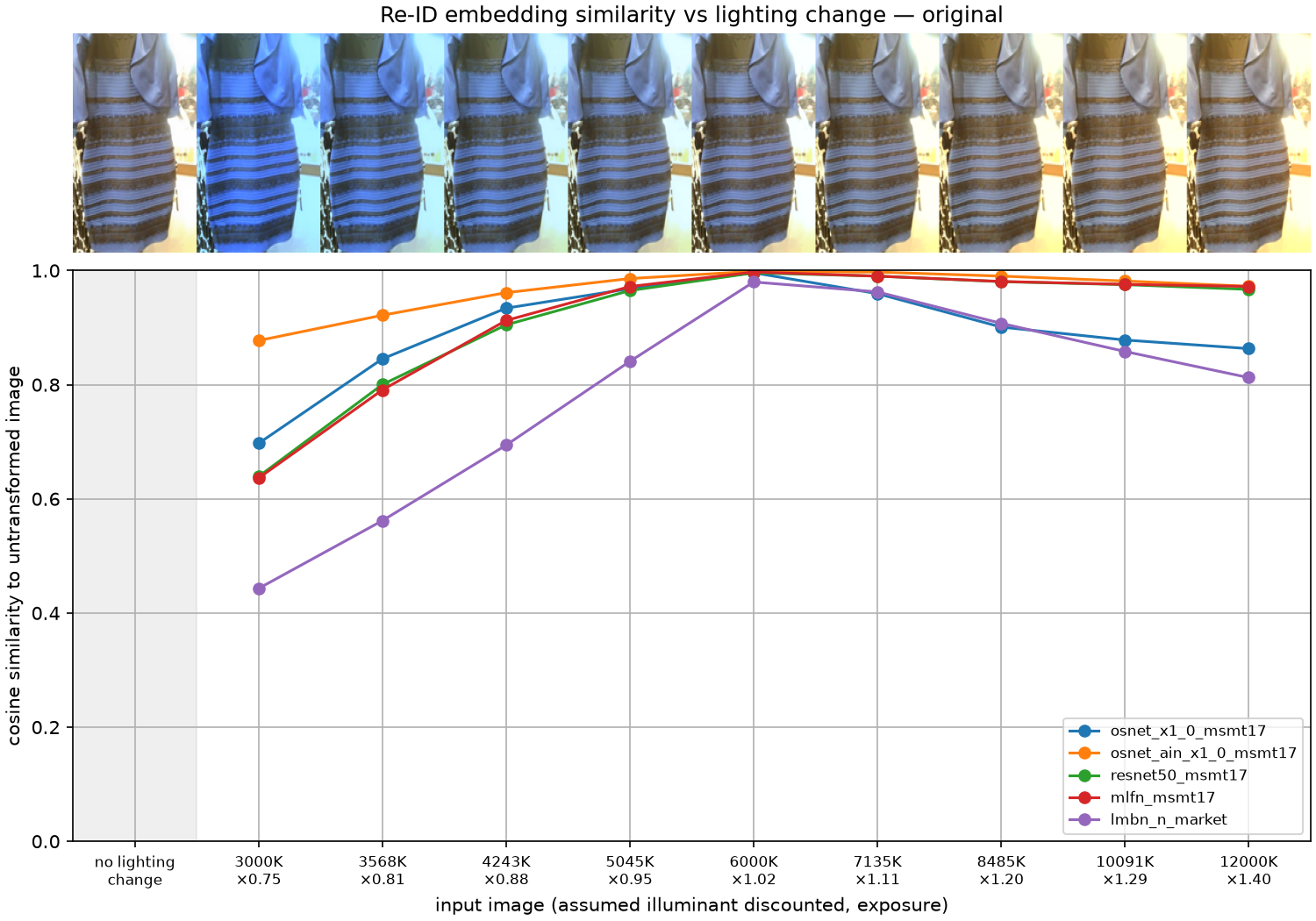
Even models specifically designed for re-identifcation suffer this problem, albeit to a lesser degree. We can see that simple lighting changes on an otherwise identical input photo can reduce similarity by nearly 60%.
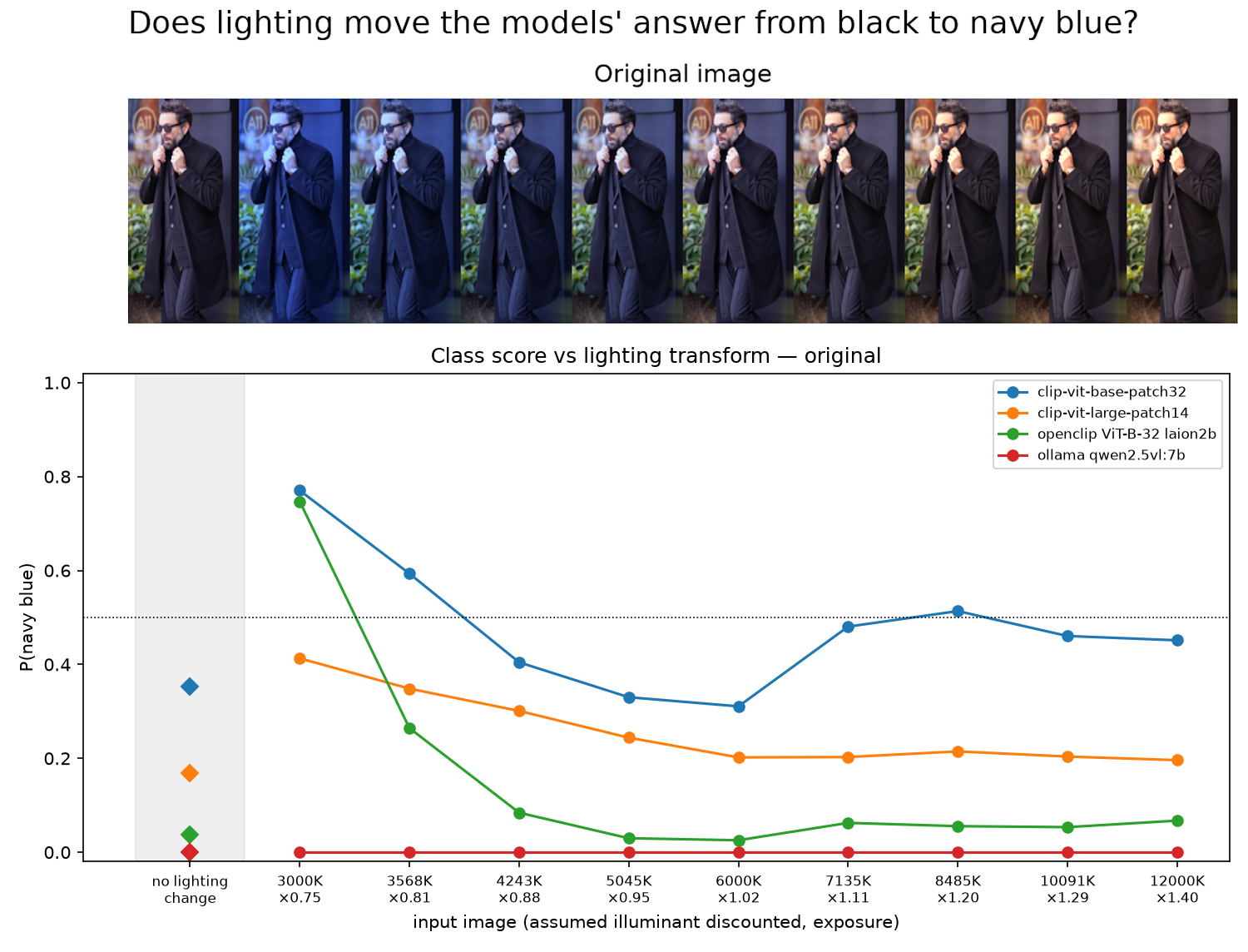
This effect is totally dependent on the clothing however; an otherwise unobtrusive black coat is far more consistent to detect and track, even when the text choice is between “black” and “navy”.
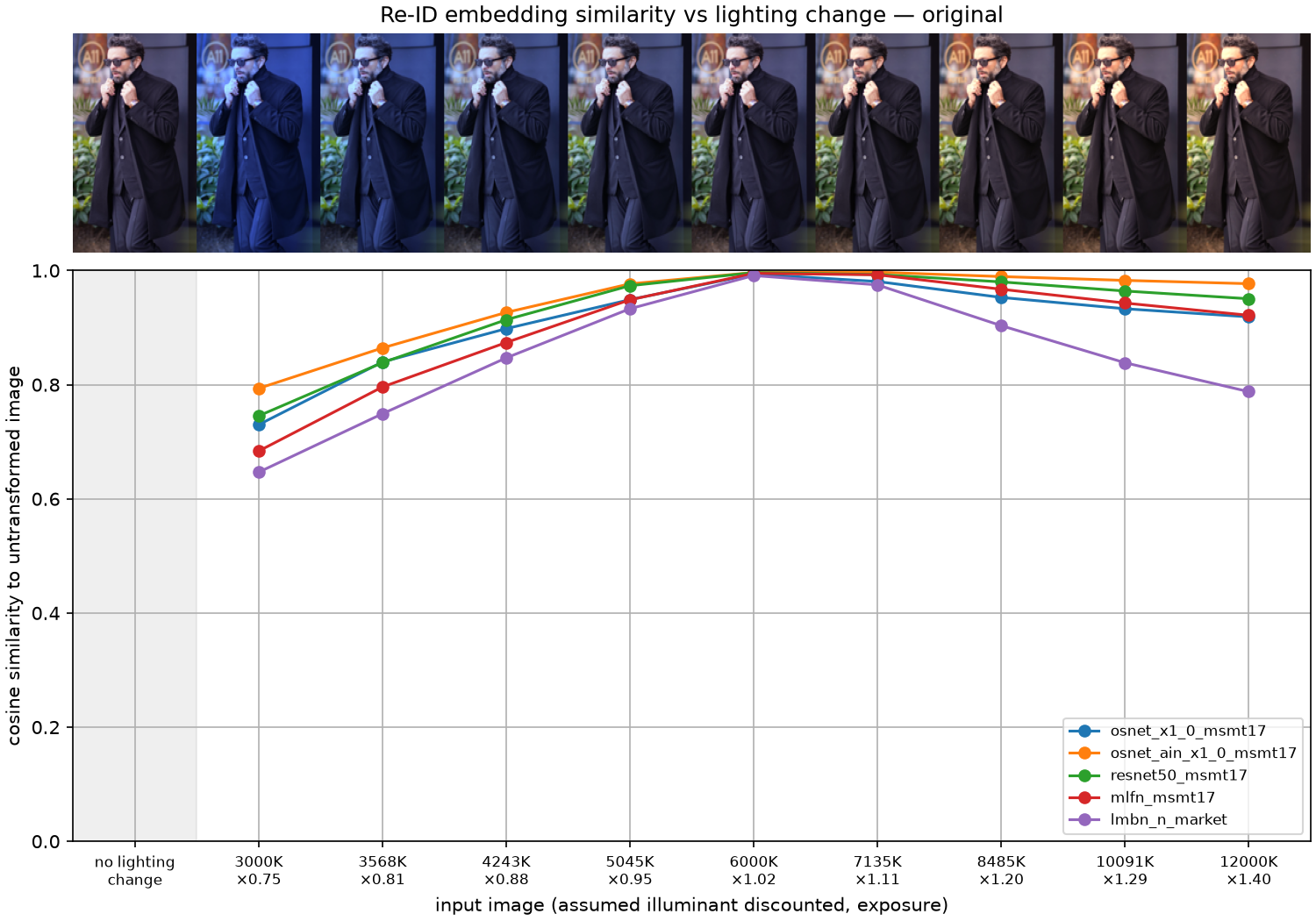
This effect will be down to the models used, the camera that records it, and the lighting that illuminates the object. Colour constancy is a field that aims to mitigate some of this, but it was never truly solved and the allure of just using modern AI techniques has relegated it (and many other classical computer vision techniques) somewhat forgotten. This means that simple choices in clothing can potentially defeat sophisticated tracking systems. Clothing specifically designed to change how it looks (e.g. thermochromic or reflective) would accentuate this further.